|
 |
 |
 |
 |
Lessons from seven churches of the Apocalypse
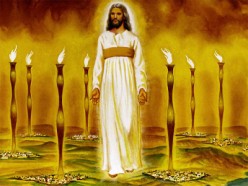
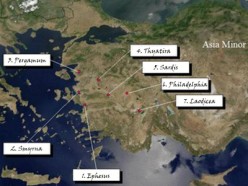
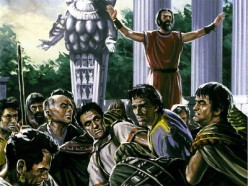
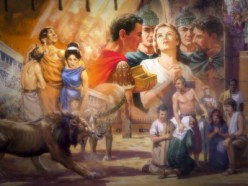
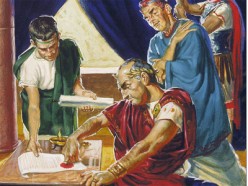
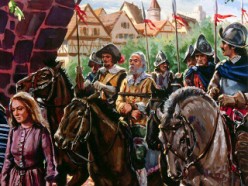
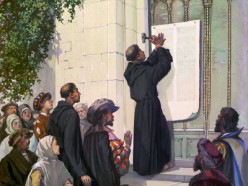
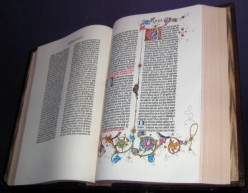
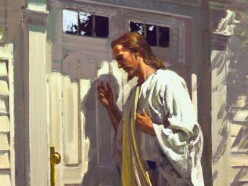
The Lesson: Through this study we will go on a journey of discoveries through some of the fascinating sites of Asia Minor or modern Turkey. It will be a journey that will bring us through the scope of the Christian ages! But our journey begins on a small lonely island out in the Aegean Sea, off the coast of Turkey. Here we meet John, the once beloved disciple of Jesus, banished to the Island of Patmos. John was cut off from fellow believers, cut off from the churches he had The same Jesus that chose John as one of His disciples while He was on earth now visits John on the Island of Patmos and has a special message for him to write down. It is a special message for you and me living in the time of the fulfilment of these incredible prophecies. Imagine the picture for a moment. As the sun sets over the Aegean sea, painting the horizon in flaming crimson, as with the stroke of the Master Artist’s brush, John sits quietly looking out over the horizon. I can imagine the thought came to his mind: What will the future bring? What will happen to the church of God? When will Jesus come again as He promised? As his life is ebbing away, he is still fervent in worshipping the One he loved most! But before this soldier of the cross would pass to rest, an important task was to be done. A message was to be given. “I John, who also am your brother, and companion in tribulation, and in the kingdom and patience of Jesus Christ, was in the isle that is called Patmos, for the word of God, and for the testimony of Jesus Christ. I was in the Spirit on the Lord’s day, and heard behind me a great voice, as of a trumpet, Saying, I am Alpha and Omega, the first and the last: and, What thou seest, write in a book, and send it unto the seven churches which are in Asia; unto Ephesus, and unto Smyrna, and unto Pergamos, and unto Thyatira, and unto Sardis, and unto Philadelphia, and unto Laodicea. And I turned to see the voice that spake with me. And being turned, I saw seven golden candlesticks; And in the midst of the seven candlesticks one like unto the Son of man, clothed with a garment down to the foot, and girt about the paps with a golden girdle.” Revelation 1:9-13 Jesus appears to John on Patmos, and He has a special message that needs to be written and sent to seven destinations. These are the seven letters to the seven churches which we find in Revelation chapter two and three. What are these letters all about? And what do they mean for us today? Through this study we want to discover some of the most remarkable letters in history. They are letters that meet basic human challenges and messages that go to the heart. The Seven Churches In Revelation chapter two and three, we find these seven short letters written to seven churches in Asia Minor. These congregations were facing a variety of challenges. Some were healthy and growing, while some were in a crisis and others were almost dead. Each letter is like a prescription written out by the Great Physician. There were certainly more than seven Christian churches in Asia Minor at the time of John, but these seven were selected because they are representative of the entire Christian era. They represent the different stages of the church throughout the centuries. “Write the things which thou hast seen, and the things which are, and the things which shall be hereafter.” Revelation 1:19 Take notice that there is a message for the days after John. We can apply the letters to John’s day, but more importantly we can see God’s message throughout the scope of the Christian era! Isn’t the Word of God fabulous! Remember that the Jewish feasts were applicable literally, but also had a deeper prophetic meaning. So it is with these seven letters to the seven churches. As you study the messages, you can see how all builds up to the coming of Jesus. The first three letters do not mention the coming of Jesus, but the latter four do. “But that which ye have already hold fast till I come.” Revelation 2:25 “Remember therefore how thou hast received and heard, and hold fast, and repent. If therefore thou shalt not watch, I will come on thee as a thief, and thou shalt not know what hour I will come upon thee.” Revelation 3:3 “Behold, I come quickly: hold that fast which thou hast, that no man take thy crown.” Revelation 3:11 “Behold, I stand at the door, and knock: if any man hear my voice, and open the door, I will come in to him, and will sup with him, and he with me.” Revelation 3:20 Hold fast till I come – I come as a thief in the night – behold I come quickly – behold I stand at the door and knock! You can sense the urgency. The coming of Jesus is getting nearer and nearer as the letters progress. But where are we in the scope of time? Let us find out by studying these prophetic letters! Keep in mind that these seven letters are not only seven literal messages to seven literal churches, and not only are they seven messages picturing the seven epochs or eras of Christian history reaching to the end of time. They are also very personal letters to you and to me! Jesus is writing to us personally to encourage us, warn us, reprove us, and inspire us! These letters are written by our Saviour who is concerned about our state. So remember the various dynamics of the messages as they are literal, prophetic and personal! The Letter to Ephesus The first letter is addressed to the church of Ephesus. The name Ephesus means “Desirable”. Literal Ephesus was a very prosperous town and in the city was the Seat of Diana (Mother of the gods). The temple of Diana was built in 480 BC and it was also known as the temple of Artemis (her Greek name). This was one of the Seven Wonders of the World. Ephesus was once one of the proudest cities in the Roman Empire. Ephesus served as capital in Asia Minor as it was a vital trade centre. The city had a huge library and a great arena or theatre which could hold up to 24,000 people. The theatre was often packed for the plays of the classic Greek and Roman writers. But one day long ago, an echo was heard throughout the arena with shouts and passionate cries! An angry mob had gathered shouting: “Great is Diana of the Ephesians”. Over and over again they would cry till they worked themselves into frenzy. Why? They were troubled and panicked about a message preached in their city. The gospel had been preached by Paul and others, and some radical things had happened as this gospel was preached. “Many of them also which used curious arts brought their books together, and burned them before all men: and they counted the price of them, and found it fifty thousand pieces of silver. So mightily grew the word of God and prevailed.” Acts 19:19-20 Occult books were burned! The worth of these books was fifty thousand pieces of silver – equivalent to five thousand US dollars. The Word of God grew mightily! There was a great turmoil as the people that sold the souvenir gods of Diana felt threatened by Paul. Their business was about to collapse because of this preacher. The message of Jesus was preached boldly in this citadel of sin and idolatry. “And the same time there arose no small stir about that way. For a certain man named Demetrius, a silversmith, which made silver shrines for Diana, brought no small gain unto the craftsmen; Whom he called together with the workmen of like occupation, and said, Sirs, ye know that by this craft we have our wealth. Moreover ye see and hear, that not alone at Ephesus, but almost throughout all Asia, this Paul hath persuaded and turned away much people, saying that they be no gods, which are made with hands: So that not only this our craft is in danger to be set at nought; but also that the temple of the great goddess Diana should be despised, and her magnificence should be destroyed, whom all Asia and the world worshippeth. And when they heard these sayings, they were full of wrath, and cried out, saying, Great is Diana of the Ephesians.” Acts 19:23-28 In the prophetic scope of time this letter covers the early apostolic church from about 31 AD till 100 AD. The church at this period had something going for it. It is a desirable church. “Unto the angel of the church of Ephesus write; These things saith he that holdeth the seven stars in his right hand, who walketh in the midst of the seven golden candlesticks; I know thy works, and thy labour, and thy patience, and how thou canst not bear them which are evil: and thou hast tried them which say they are apostles, and are not, and hast found them liars: And hast borne, and hast patience, and for my name’s sake hast laboured, and hast not fainted.” Revelation 2:1-3 Ephesus receives the commendation that the church tested certain teachings and found them to be false. They must have had something with which to test the teachings and doctrines. The Word of God was their foundation for all teaching. This church did not allow Pagan worship to enter into the church. They discerned between good and evil. The way Jesus presents and introduces Himself to each Church matches the message given. Jesus is in their midst! Many Christians in the early church had walked with Jesus, and known Him personally while He was on earth. They were sad when He ascended to heaven, but the confirmation was given that He would be in their midst! But God in His love gave them some reproof as well. “Nevertheless I have somewhat against thee, because thou hast left thy first love. Remember therefore from whence thou art fallen, and repent, and do the first works; or else I will come unto thee quickly, and will remove thy candlestick out of his place, except thou repent.” Revelation 2:4-5 They had lost their first love. The first fire had cooled down! Complacency had set in and needed to be removed. Take notice that if they would not live up to the light, Jesus would take away the candle. This is also a personal message to us. How easy is it to lose our first zeal and love for the gospel! Sometimes in life we have to make a step backwards to make progress! We need to remember our early experiences with God and keep that fire burning. The church of Ephesus received yet another recommendation. “But this thou hast, that thou hatest the deeds of the Nicolaitanes, which I also hate. He that hath an ear, let him hear what the Spirit saith unto the churches; To him that overcometh will I give to eat of the tree of life, which is in the midst of the paradise of God.” Revelation 2:6-7 They hated the deeds of the Nicolaitanes. Take careful notice: God hated the deeds of the Nicolaitanes, not the Nicolaitanes! It is easy to turn it around and hate the people and love the false doctrine. But the early Christians had the right perspective! When a system propagates falsehood and lies, God hates that system. He still loves the people in that system and wants them to leave the system before it is too late. In later studies we are going to look at some systems that God does not favour because of their determined effort to undermine his truths. He is calling his children out of these false man-made systems. Who were the Nicolaitanes? They were a Gnostic sect that taught that the law of God did not apply for the man in the flesh because man was spirit and flesh and therefore that which he did in the flesh did not apply to his spirituality. This is a common teaching today as well. There are many lessons given to us through the first letter to Ephesus. Once it was a city of great glory, but today only archaeologists can piece together the glory Ephesus once had. The message is still vital throughout the ages: Do not leave your first love! The Letter to Smyrna The second letter is addressed to Smyrna, which is today called Izmir. In the ancient city was the Shrine to the goddess Nemesis. Polycarp was the first minister in Smyrna, and a disciple of none other than John. He was martyred for his faith as the Christians were severely persecuted in Smyrna. In their distresses and troubles Jesus comforts them with a letter. “And unto the angel of the church in Smyrna write; These things saith the first and the last, which was dead, and is alive; I know thy works, and tribulation, and poverty, (but thou art rich) and I know the blasphemy of them which say they are Jews, and are not, but are the synagogue of Satan. Fear none of those things which thou shalt suffer: behold, the devil shall cast some of you into prison, that ye may be tried; and ye shall have tribulation ten days: be thou faithful unto death, and I will give thee a crown of life. He that hath an ear, let him hear what the Spirit saith unto the churches; He that overcometh shall not be hurt of the second death.” Revelation 2:8-11 Jesus introduces Himself as the One which was dead, but is alive. Each introduction, and the way Jesus presents Himself, is of high significance. Jesus comforts this church with the fact that death is not the end for a Christian. There is hope of a resurrection! Smyrna means sweet smelling (Myrrh). The prophetic time covered here is 100-323 AD. The first church grew rapidly and everything went well. Now Christianity started to challenge the existing religions and things began to change. Persecution broke out! As soon as you challenge the paradigms of the world, this is often the result. The letter speaks about 10 days of persecution. Remember that in prophecy each day stands for a year. Emperor Diocletian persecuted the Christians severely for 10 years – 303-313 AD. Christians were burnt, thrown to the lions, and martyred in the Roman Colosseums. Amazingly, Satan’s effort to halt Christianity resulted in it’s growth. Justin Martyr said: “The blood of the martyrs is the seed of the gospel”. The more persecution increased, the more the church grew. One died and 10 stood up in place! This church receives no reproof, only commendation! Something happens when persecution comes. The dross is shaken out and the pure and true hearted remain, while those that are there for titles and benefits disappear. Under persecution those who are known for their form of religion fall away. The books of Daniel and Revelation predict another time of persecution just before Jesus comes the second time. We need to be deeply rooted in the Word in order to stand through whatever may come. The Letter to Pergamos The Devil is furious and seeks to destroy God’s church throughout time. He tried persecution, but it did not work. Since plan A did not work, he moved to plan B – and he has stuck with that plan ever since! There has never been need of plan C! What was plan B? If you can’t beat them, join them! His attack on God’s truth was extremely successful this time. We need to know this history, because the Devil is using the same plan today. Aldous Leonard Huxlex said: “That men do not learn very much from the lessons of history is the most important of all lessons that history has to teach.” This great attack launched against the early church can be summed up in one word: Compromise! Compromise happens when we depart from the Word of God. Take notice how Jesus introduces Himself to this church. “And to the angel of the church in Pergamos write; These things saith he which hath the sharp sword with two edges.” Revelation 2:12 “For the word of God is quick, and powerful, and sharper than any two-edged sword, piercing even to the dividing asunder of soul and spirit, and of the joints and marrow, and is a discerner of the thoughts and intents of the heart.” Hebrews 4:12 Jesus has the two-edged sword. What is the two-edged sword? It is the Word of God. The Sword cuts compromise! Yet the church came to a time that it no longer used the Sword. Man’s ideas were lifted above God’s. Pergamos means elevation. What kind of elevation took place? Self was lifted above the divine. This really pictures our present day problem as we are told to seek for strength from within. We rely on man rather than God. But God also commended some in the church for their faithfulness. “Neither is there any creature that is not manifest in his sight: but all things are naked and opened unto the eyes of him with whom we have to do.” Revelation 2:13 There were those that were faithful in the midst of Satan’s seat. Where ever we are we can remain faithful to God. These Christians were in the midst of paganism and idolatry, but worse than this they were in the midst of professed Christianity that had compromised. “Seeing then that we have a great high priest, that is passed into the heavens, Jesus the Son of God, let us hold fast our profession.” Revelation 2:14 False teachings had been accepted and the letter refers to the doctrine of Balaam. What is the doctrine of Balaam? It is compromise! Have you heard of the story of Balaam in the Bible? He was asked by the enemies of God’s people to curse the Hebrews before they entered Canaan. He went, but every time he tried to curse the people a blessing came out of his mouth as they were protected by God. The enemy realised that the only way they could conquer the Israelites was to get them to sin against God so His protection would leave them. So they organised a feast whereby they worshipped their pagan gods. To get the Israelites involved they sent beautiful women from their tribes into the camp of the Israelites. This enticed the men, and they compromised. The doctrine of Balaam is referring to the people of God compromising. What happened in the scope of Christian history? Pergamos covers the time from 323 to 538 AD. Constantine became Emperor of Rome and he realised the threat of total chaos as he ruled over an Empire with many Christians and many Pagans. He became, by name a Christian and decided to merge Christianity with paganism. He actually wanted to please both parties, and so he brought pagan gods, concepts, and teachings into the Christian church so the pagans would feel well in the church. Does this sound familiar? Isn’t this often the approach of modern church-growth movements? They bring the “best” the world has to offer into God’s church. The church may grow in quantity, but it is not growing in quality! We are advised to stick with the Word of God. During the time of Pergamos, teachings and doctrines came in that caused the people to compromise and start worshipping other gods. It happened under the reign of Constantine. Obedience to God was replaced by obedience to man! The Bible refers to Pergamos as the seat of Satan (Revelation 2:13). How did it become like this? Pergamos was the capital of the Roman province of Asia. It had the temple of the god Zeus and Acsellepius, the serpent god, also known as a healer wrapped around a pole. We still use that symbol today in the medical world. Pergamos was the centre of the Babylonian priesthood. This is quite an interesting history. When Medo-Persia conquered Babylon, Medo-Persia took over the priesthood, but many of the Babylonian priests were driven out and they fled to reside in Pergamos. Here we find the official Babylonian priesthood. They took the Palladium stone and the vestments of Dagon. Dagon is the fish god which was also worshipped by the ancient Philistines. They had a fish robe and a fish mitre and this all represented Dagon, the god of the fish. The Babylonian priest was called Pontifex Maximus (bridge builder), which means he was considered the bridge between heaven and earth. The priest was the mediator through which you could be saved, rather than Jesus Christ. The priest had two keys, one to heaven and one to hell. These priests were called pontiff king of Pergamos. The last of these kings was Atalus III (133 BC). This king bequeathed the title to Rome and so the Roman emperors started bearing the title Pontifex Maximus. You will find this behind their names. Remember that these Roman emperors were viewed and worshipped as gods and you could even pray to them. But where else do we find this name? You do not only find the name Pontifux Maximus behind the name of the emperors, but also behind the name of the Popes of Rome. So this title came through the history of paganism and arrived at the pontiffs of Rome. It was adopted into the Church of Rome! The popes also claim to have the two keys which they refer to Peter, and the same vestments like Dagon resembling the fish god. How did all of this get into the Christian, church? What happened at Pergamos? It was a time of compromise. In AD 378 the Christian emperor Gratian, refused the title Pontifex Maximus and so it went to Damascus, bishop of Rome. It lay vacant for a while, but was seized by the bishop of Rome. The church united with paganism. “So hast thou also them that hold the doctrine of the Nicolaitanes, which thing I hate.” Revelation 2:15 “Repent; or else I will come unto thee quickly, and will fight against them with the sword of my mouth.” Revelation 2:16 The first church hated the deeds of the Nicolaitanes. The church has now come to a point that it loves this doctrine! God gives this church time to repent. A shaking and sifting is going on in the church of Pergamos. There are those holding on to truth, while others compromise, and those that compromise start persecuting the faithful. “I know thy works, and where thou dwellest, even where Satan’s seat is: and thou holdest fast my name, and hast not denied my faith, even in those days wherein Antipas was my faithful martyr, who was slain among you, where Satan dwelleth.” Revelation 2:13 Who is this figure Antipas? Antipas is not a common name, and it is supposed that he was not an individual, but representing a class of people that opposed the power of the bishops and popes of those days. Anti means to oppose and Pass (Papas) means father or pope. As the bishops and popes ruled and united with stately power, the church became corrupt with man-made traditions and doctrines of paganism. Traditions were placed above the Bible and many were martyred for opposing the corruption flooding into the church. The next time period is one of the saddest time periods in the Christian church era, because once you have accepted compromise it grows like a cancer within the church. The church became total darkness. The Letter to Thyatira “And unto the angel of the church in Thyatira write; These things saith the Son of God, who hath his eyes like unto a flame of fire, and his feet are like fine brass.” Revelation 2:18-21 God gave the compromised church opportunity to repent, but as she would not, a separation took place. The church clung to the teachings of paganism.The example of Jezebel is given. Ahab, the king of Israel went into a relationship with a pagan queen, called Jezebel. The king married into paganism and the church of God tolerated and accepted the teaching of paganism in its midst. This resulted in persecution of Gods prophets in ancient Israel. Now, during the time of Thyatira, God’s church was persecuted during the middle ages. The worst is that they were not persecuted by pagans, but so called Christians. The Papal Church which had merged with paganism, now united with the state and from 538 till 1798 AD a severe persecution took place, lasting for 1260 years. In 538 AD the Justinian decree appointed the Bishop of Rome as the “corrector of heretics”. The Word of God was no longer that which decided right from wrong. The traditions of the compromised church were now the rule of faith and Jesus was removed and replaced for a human mediator which was the earthly priest. The Church of Rome had become so corrupt that God had to raise up a new church. “But unto you I say, and unto the rest in Thyatira, as many as have not this doctrine, and which have not known the depths of Satan, as they speak; I will put upon you none other burden.” Revelation 2:24 The candlestick remained with the faithful. It was removed from those who compromised and now persecuted the true church. God does not put us off at once when we reject His truth but He tries to reach us again and again! But there comes a time when our hearts are hardened and the Holy Spirit cannot work any longer. The compromised Church of Rome did not repent according to the message. This church experienced the way which Satan would take them (Rev 2:24), which is to the depths of occultism and paganism. These were accepted in her midst. This was a real master plan of the Devil, like a ravening wolf with sheep’s clothing! “Take heed therefore unto yourselves, and to all the flock, over the which the Holy Ghost hath made you overseers, to feed the church of God, which he hath purchased with his own blood. For I know this, that after my departing shall grievous wolves enter in among you, not sparing the flock.” Acts 20:28-29 Paul predicted that this would take place. God took the candle away from those that would not repent but chose to remain in darkness. The candle was given to those that followed the Word of light and truth. “And now, behold, I know that ye all, among whom I have gone preaching the kingdom of God, shall see my face no more.” Revelation 2:25 They were to hold on to the truth and not to let it go! We have come to a time when everything that can be shaken is being shaken, and the question is, will we hold on to the truth? Let us quickly review the prophetic scope of the first four churches. First we have a church (Ephesus) which is Christ driven and pure in doctrine. Then we have a church (Smyrna) that is persecuted, but remained pure and vigilant. Then a compromise takes place (Pergamos), and many lose their trust in the Word of God. This compromise takes on epidemic proportions till the church hardens itself completely. The fallen church then unites with paganism and stately powers and persecutes the true believers (Thyatira), who have received the candlestick of truth to carry on uncompromised! The Letter to Sardis The name Sardis means renewal or that which remains and this refers to the time of reformation. This period can be dated from about 1517 till 1798 AD. The reformation began with Luther nailing his 95 theses on that church door in Wittenberg. Truth had been so far compromised that it was ready to die! “Be watchful, and strengthen the things which remain, that are ready to die: for I have not found thy works perfect before God. Remember therefore how thou hast received and heard, and hold fast, and repent. If therefore thou shalt not watch, I will come on thee as a thief, and thou shalt not know what hour I will come upon thee.” Revelation 3:2-3 There needed to be a complete renewal. Those that remained faithful had to completely come out and separate themselves from the erroneous views and teachings of the ecclesiastical Church of Rome. This was the time of the reformation, but even though the reformation brought revival and renewal, there was a long way to go! It was not complete because something was left undone. The protestant movement was driven by the phrase: Sola Scriptura, which means the Bible only! The Church of Rome said: No! We will have the Bible and church tradition. This thinking implying that man supersedes and controls the Bible can be traced back to paganism. Protestantism came a long way, but sad to say held on to certain compromises directly linking them to Rome. The reformation was a wonderfully powerful tool, but it didn’t finish the job! “Thou hast a few names even in Sardis which have not defiled their garments; and they shall walk with me in white: for they are worthy.” Revelation 3:4 Some would walk in white. This could refer to the reformers like John Huss, Tyndale, Wycliffe and Martin Luther. In the prophetic time of Sardis many churches arose. The Lutheran Church came up, but then Calvin said that Luther did not get it all and so a new church movement arose called Calvinists. Then along came the Baptists with the teaching of Baptism. Remember that the Church was coming out of darkness and gradually discovered more and more from God’s Word. But many in the Lutheran church said that what Martin Luther did not see, they would not see either. The same happened with the Calvinists. You had an explosion of Christian denominations! All had something from the Bible, but they were different from each other which separated them. But don’t we all have the same Bible? Can’t we find out what the truth actually is? Not when man stands in the way of truth. Yet God would continue to lead His people who held on to His Word. The Letter to Philadelphia Philadelphia means brotherly love. The prophetic time for this church can be traced from about 1798 till 1844 AD, when a great world-wide reformation began. Bible societies sprang up in different countries. The British Bible society started in 1804 and then the American shortly after in 1816. At the same time the prophecies of Daniel and Revelation were opened up and studied and the message of Jesus’ soon coming began to be preached with power. Christians were led together (brotherly love) with a message of Christ’s soon return. “And to the angel of the church in Philadelphia write; These things saith he that is holy, he that is true, he that hath the key of David, he that openeth, and no man shutteth; and shutteth, and no man openeth; I know thy works: behold, I have set before thee an open door, and no man can shut it: for thou hast a little strength, and hast kept my word, and hast not denied my name… Because thou hast kept the word of my patience, I also will keep thee from the hour of temptation, which shall come upon all the world, to try them that dwell upon the earth. Behold, I come quickly: hold that fast which thou hast, that no man take thy crown.” Revelation 3:7-8, 10-11 This church only receives commendation and no reproof. There is love and truth in this movement. Truth was restored to God’s faithful people as men from different denominations were convinced that Jesus’ coming was near. A door was opened for the proclamation of the gospel and a message of prophecy. The opening and shutting of the door also has significance as we think of Christ’s ministry in the heavenly Sanctuary. According to the prophecy in Daniel 8 and 9, the cleansing of the Sanctuary would take place in 1844. Jesus, as our High Priest, would move from the Holy to the Most Holy place to commence His final work of intercession and judgment. The Letter to Laodicea This final Church period begins with the time of judgment leading to the very end. Laodicea means a people judged! It was the time of investigative judgment before Jesus would come the second time. This is the very time in which we are living. Ancient literal Laodicea was a very wealthy city. Antiochus built it and named it after his wife Laodicea. The city was known for its large health resort. Laodicea had a fascinating pipe system as water flowed through to the city. Not too far away there were hot wells from which they would pipe water to the city. The water was transferred from the hot springs, but when it arrived in Laodicea it was lukewarm. It makes me think of how the first church was hot and on fire for Jesus, but throughout time the fire diminished. The church has had these ups and downs – hot and cold – and we are left in a lukewarm condition! “I know thy works, that thou art neither cold nor hot: I would thou wert cold or hot. So then because thou art lukewarm, and neither cold nor hot, I will spue thee out of my mouth. Because thou sayest, I am rich, and increased with goods, and have need of nothing; and knowest not that thou art wretched, and miserable, and poor, and blind, and naked.” Revelation 3:15-17 This is the worst situation to be in. As a matter of fact, Jesus has no commendation for this church at all. Take notice that the rebuke is not that the candlestick will be given to another, as this is the very last church in history. The lukewarm will be spewed out of the mouth of God, revealing that there will be a shaking! Many will be shaken out, while others will be shaken in. This final church is described as poor, even though it thinks it is rich. They think they have the truth, but Jesus is not in their thoughts. You can have all the truth and know it intellectually as no other, but this will not save you unless the truth is applied in the heart and life. But I do not want to end this study on a sad note. There is hope for this final church. There is hope for you and me. Jesus offers this church His character, His salvation. “I counsel thee to buy of me gold tried in the fire, that thou mayest be rich; and white raiment, that thou mayest be clothed, and that the shame of thy nakedness do not appear; and anoint thine eyes with eyesalve, that thou mayest see. As many as I love, I rebuke and chasten: be zealous therefore, and repent. Behold, I stand at the door, and knock: if any man hear my voice, and open the door, I will come in to him, and will sup with him, and he with me. To him that overcometh will I grant to sit with me in my throne, even as I also overcame, and am set down with my Father in his throne. He that hath an ear, let him hear what the Spirit saith unto the churches.” Revelation 3:18-22 At this time Jesus presents His gifts to us! He is knocking on the door and waiting for us to open! Are you lukewarm? Are you playing the Christian life? If so, don’t despair – Jesus is knocking at the door of your heart! Will you open it? All the Promises to All the Seven Churches Are Personal Promises to Us The book of Revelation is all about restoration! In the book of Genesis we read about a world fallen into sin. Because of disobedience and sin we lost precious blessings. But through the promises to the seven churches of Revelation all is perfectly restored!
|
|||||||||||||||||
|
|
||||||||||||||||


 Letters from a Lonely
Isle
Letters from a Lonely
Isle founded. Here he is, old and worn from a hard life of trials and persecution while preaching the gospel. But he is still the beloved disciple, and is now honoured to close his ministry with writing the most fascinating book of all time – The Revelation.