|
 |
 |
 |
 |
History and Archaeology Prove God‘s Word
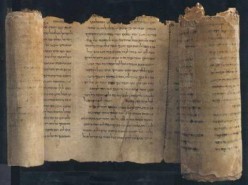
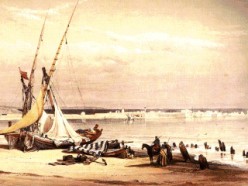
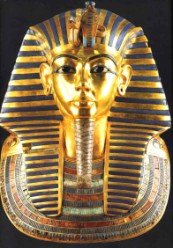
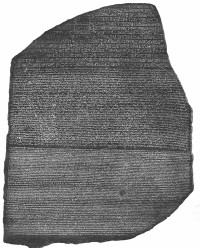
The Lesson: Through this study we want to answer the question: What does ancient history and archaeology have to say about the Bible? Our journey is going back in time as we will follow the spade of the archaeologist. But what actually is archaeology? To put it simply, archaeology is a method of studying the past, by researching material evidence – things people created and made. I have always enjoyed the outdoors, going on nature hikes and things like that. Sometimes when I would come to a precipice, cliff, or rock wall, I would like to shout something and wait to hear my echo. It was as if the rocks were speaking to me, but it was my own voice. I consider archaeology to be the echo of God’s voice! The evidence of archaeology repeatedly affirms the truthfulness and historicity of Bible records. The stones of the earth collaborate to authenticate the truth of the Bible. Remember that the Bible is not only a holy book, but it is a history book. It is distinguished from the “sacred” books of other world religions. It tells us of God’s dealings with people in the history of the world. It records facts of history. But God also speaks to us through His Word. Many people often fail to hear Him; then the echo of things already taken place redounds to us in an attempt to authenticate the Word for us. Let us discover how objects long hidden now authenticate the most published and read book in the world – the Bible! The Valley of the Kings Archaeology was not really a science until less than two centuries ago. Then man began to organise excavations and monitor the search for ancient artifacts. Before that it was more treasure hunting and grave robbing! This has caused many interesting and valuable artifacts of history to disappear, as has been the case on a site known as the Valley of the Kings in Egypt. The Valley of the Kings lies just a few kilometres from the west bank of the Nile, opposite Karnak and Luxor, and more than six hundred kilometres south of Cairo. It had been the royal cemetery of Thebes, the ancient capital of the Egyptian empire at the height of its power. The name “Valley of the Kings” says enough! It was a cemetery of the ancient pharaohs. The Egyptians believed in an after life and they would take the riches with them. The pharaohs were buried in huge tombs with priceless artifacts of gold and dazzling treasures of silver, ivory, ebony, and alabaster! In all, 60 tombs had been uncovered in the bedrock of the Valley, but every one had been pillaged by ancient grave robbers. Most experts believed that the burial ground had yielded all its secrets. Archaeologist Howard Carter and his team, in the early 19th century, were excavating this area. It seemed a waste of effort to carry on as they had painstakingly searched the area and, in so doing, had moved 200,000 tons of sand and rubble. And yet, despite the many ancient tomb robbers, archaeology still had its secrets! Howard Carter was convinced that one royal tomb remained to be found in the Valley of the Kings. The tomb of Pharaoh Tutankhamen! He persuaded his sponsor to support one final attempt to find it. Only one small section of the Valley remained to be explored. Carter was certain this small triangle of rock and sand was the site of Tutankhamen’s burial place. Early in November 1922, Carter returned for what was intended to be his final season in the Valley of the Kings, and with his team he began to clear the last section. It was covered by rubble and the remains of ancient workmen’s huts. After a few days the huts were properly recorded and removed, and Carter could excavate the site. He met with immediate success as a step cut in the rock was uncovered. There were sixteen steps in all, beyond which lay the sealed entrance to a tomb. The entrance bore seals with Tutankhamen’s name! The entrance revealed a long passage filled with rubble. This passageway must have been filled with these stones after an attempt had been made to rob the tomb, for such an attempt was made soon after the young king was buried. When the rubble was all cleared out, the passageway led to another sealed door. Carter made a small hole in the upper left-hand corner, held up a candle to test for escaping gases, and then peered in. It would be an understatement to say he had a good day! What Carter saw when his eyes became accustomed to the gloom was the full grandeur of an ancient Egyptian royal burial. Carter was looking into the antechamber, the largest of four underground chambers that comprised the tomb. Before him lay large life-size statues, a golden throne, magnificent vases, richly decorated chests, and gold—everywhere the glint of gold! “It was the day of days,” Carter wrote, “the most wonderful I have ever lived through.” Carter found a sculptured stone coffin of great beauty. Within it lay three mummy-shaped coffins, one fitting within the other. The first was made of gilded wood, the second of wood covered with gold leaf, and the third, breathtakingly beautiful, of solid gold, inlaid with precious stones and jewels. Of this amazing series of nesting shrines and coffins, the most fabulous was surely this third and last coffin. It was the most unique and wonderful thing Carter had ever seen. A breathtakingly beautiful marvel of solid gold, weighing 110kg! This is one of the world’s most magnificent treasures. Inside the third coffin, Carter found that the mummy itself wore a stunning gold death mask. This lifelike image of the boy-king was beaten out of solid gold. It is believed that it had captured the expression of the young king overtaken prematurely by death. It took Carter five years to preserve and remove the treasures of the tomb. Statues, pieces of chariots, jewels, and weapons were taken to the Cairo Museum. Tutankhamen’s treasure is said to be the most spectacular of all archaeological discoveries. Its value is priceless! Considering the riches within his tomb, we can only wonder what magnificent treasures might have been found in the far larger tombs of the great pharaohs, such as Ramses II or Thutmose III. Tutankhamen was not a particularly significant pharaoh. He ascended Egypt’s throne around 1361 BC at the age of nine. Before Tutankhamen reached twenty, he died, and the cause of his death has remained a mystery. After his death, Tutankhamen was quickly forgotten. Soon the entrance to his tomb disappeared under the rubble of the valley floor, and the later workmen’s huts hid it completely. This, ironically, was what made the discovery of his tomb so important. All other royal tombs in the Valley of the Kings had been systematically plundered. His alone was left largely undisturbed by grave robbers. And yet there are treasures in archaeology that I consider of more value than the tomb of Tutankhamen – or even a mightier pharaoh! These treasures are usually left by the grave robbers because they see no worth in them. They are ancient artifacts that reveal something more valuable than gold and silver. Discoveries that shed light on the priceless Word of God! One of them is the Rosetta stone – another treasure from Egypt! The Rosetta Stone! For many centuries, the history of ancient civilisations lay buried under the sands of time. Slowly, but gradually, sites were excavated and remarkable artifacts were found. But there was a problem! The information that was available could not be deciphered because some of the ancient languages and writings were not understood. In Egypt, the inscriptions were veiled in mystery because the art of reading the hieroglyphics had been lost. However, this situation was dramatically changed when Napoleon invaded Egypt in 1798. Shortly afterwards in 1799, one of his scientists discovered a flat stone with three different languages on it at a place called Rosetta. After careful investigation they discovered that it carried an identical message in three different languages. At the bottom was Greek, in the middle Demotic (Egyptian phonetic) and on top hieroglyphics. They looked at the hieroglyphics, and nobody could understand the picture language of the Egyptians. Deciphering the ancient writing was a major task. It took a man by the name of Jean Francois Champollion 22 years to complete this task! It is only for the last 100 years that the mysteries of the ancient civilisations are being unfolded. But today it is possible to read hieroglyphics! We have been able to break the code of this ancient picture language that was not known for about 2000 years. Now after a long time the ancient stones start to speak! God had spoken long ago and now His echo is being heard. How? As archaeologists and others decipher the ancient writing – hieroglyphics – on tablets, walls, in tombs, in pyramids, temples, etc. they are finding evidence of historic accounts that match with the historic account we find in our Bible! This is powerful evidence that God’s Word is authentic! This is a treasure worth more than the tomb of Tutankhamen and all its gold! Let us look at some examples of how the picture monuments speak to us and confirm the authenticity of the Bible. The Story of Joseph For a long time the stories of God’s people in Egypt had been a subject of much ridicule. Higher critics regarded the stories, such as the account of Joseph who became second in command in all of Egypt, and the Exodus, as belonging to the realm of mythology. The Bible records how Jacob, the patriarch and grand son of Abraham, had 12 sons. Joseph was one of his sons whom he was favoured above all others. Envy was created in the hearts of Josephs’ brothers, and the story records how they sold Joseph as a slave. Joseph ended up in Egypt, but through remarkable, God-led circumstances he came to the top as second in command of all Egypt. The Pharaoh had a dream of seven fat cows eating seven lean cows. He did not know the interpretation, and God led him to Joseph who made known the dream. God was revealing to Egypt that seven years of abundance would be followed by seven years of famine (Genesis, chapters 39-41). “I collected corn…I was watchful in times of sowing. And when famine arose lasting many years, I distributed corn…The Nile has not overflowed for a period of seven years…Herbage fails…The storehouses were built…All that was in them has been consumed.” The Hittites There is a group of people called the Hittites, mentioned in the Bible 47 times. Before the meaning of the hieroglyphics were unlocked, the scholars said the Hittites never existed. Some older books say, “Those dim Christians believe in Hittites. There never was such a thing.” The Hittites are mentioned in the Bible as having major attacks on the Egyptians and being a major nation. The scholars said for years: “They never existed; the Christians are ignorant to believe in them.” All the while, the hieroglyphics were speaking to us of battles between the Egyptians and the Hittites. And once the hieroglyphics were unlocked through the Rosetta Stone, there is not a modern scholar in the world that disbelieves the Hittites. They actually discovered the Hittite civilisation through ruins in Turkey. Numerous Hittite cities, where thousands of people had lived, were excavated. The Bible is indeed proven by archaeology and the echo in the stones is speaking to us today! The Moabite Stone Another incredible discovery is the Moabite stone. The Moabite stone was discovered in Jordan in 1868 and over the last 140 years we have had a chance to confirm the authenticity of it. It records, in the rock, the Moabite attacks on Israel. You can read about those attacks in the Old The Lachish Letters The Lachish letters were discovered in southern Israel, about 24 miles north of Beersheba. The discovery took place from 1932 to 1938. The Lachish letters record Nebuchadnezzar’s attack on Jerusalem in 586 BC. You can read it in the Bible and you read it in the rock records! The various nations recorded in the Old Testament of the Bible can be verified in stone records and letters, like the events and encounters of God’s people with the Egyptians, Hittites, Moabites, and Babylonians. The Ebla Tablets Prior to the advent of modern archaeology, knowledge of the ancient civilisations was fragmented and the only records of kings, kingdoms and wars were those preserved in ancient manuscripts. In many cases the only records were found in the Bible. The Biblical record was often brushed As recently as 1964 the ancient records of the kingdom of Ebla were discovered at Tel Mardikh near the present city of Idleb in Syria. Excavations were carried out by a team of archaeologists headed by Professor Paul Mathia of the University of Rome. The so-called Ebla tablets (the official records of the kingdom of Ebla) were discovered, and date from 2300-2400 BC. These records are written on over 14,000 clay tablets and contain records of Sodom and Gomorrah, previously only known from the Bible records. Besides references to Sodom and Gomorrah, the Ebla tablets list numerous Bible places, the names of Esau, Abraham, Israel, Sinai and Jerusalem. The Ebla tablets have great significance! It is one of the largest, most extensive libraries in rock records that are found, and contains thousands and thousands of volumes. Thousands of echoes from the past! The Ebla Tablets mention the creation story very similar to the Bible’s creation story, and a flood account very similar to the Biblical account. The Ebla tablets talk about Abraham, they talk about Isaac, and beyond all – they mention two sinful cities, Sodom and Gomorrah. These are now gone! So we have evidence of places that the Bible has spoken of which are completely gone. Yet the echo remains! Archaeology again confirms the authenticity of the Bible. The Dea Sea Scrolls One of the most amazing discoveries of the 20th century would be the discovery of the Dead Sea Scrolls in the Qumran caves. In 1947 a young Bedouin shepherd by the name of Mohammed Ahmed el-Hamed lost a goat and was searching for it in the Qumran caves. Qumran lies northwest of the Dead Sea between Jericho and Ain Geddi. The young man threw stones into a cave in order to see if his goat had strayed into one of these recesses. One of the stones broke the clay jar in which scrolls were contained, and the sound of breaking pottery attracted his attention. He found jars filled with ancient scrolls. The initial discovery yielded seven scrolls. A search began that lasted nearly a decade and eventually produced thousands of scroll fragments from eleven caves! Since their discovery more than half a century ago, the scrolls have been the object of great scholarly and public interest. About 2000 years elapsed between the time the scrolls were hidden in the cave, by the Essenes who lived there in the time of Christ, and their discovery in 1947. Interest in the scrolls has intensified over the latest years. The Dead Sea Scrolls date back to the events described in the New Testament and they add to our understanding of the Jewish background of Christianity. But more important than this, they authenticate the Bible we have today! Fragments of every book of the Hebrew Canon (Old Testament) have been discovered, except for the book of Esther. This archaeological discovery of the Dead Sea Scrolls was a blow for the sceptical, secular, Bible-denying world! It was thought by some that these 2000 year-old manuscripts would show that the Bible had changed significantly over time and that its reliability was therefore questionable – but the opposite was true! The earliest scrolls dated back to 600 BC and they were beautifully preserved. The scroll of Isaiah was compared with the modern day text and it was exactly the same, except for punctuation marks, after 2500 years of translation! God knows how to preserve His Word! “The words of the LORD are pure words: as silver tried in a furnace of earth, purified seven times. Thou shalt keep them, O LORD, thou shalt preserve them from this generation for ever.” Psalm 12:6-7 Praise the Lord – His Word has been preserved! Predictions of Prophecy Confirmed in Archaeology: The Destruction of Tyre Not only do stones echo the evidence and reliability of the Bible, and not only do ancient manuscripts, letters, and scrolls authenticate the Scriptures we posses today. There is more! There are predictions and prophecies in the Bible that have been confirmed in archaeology. One of these remarkable prophecies pertains to the destruction of the city of Tyre. The city of Tyre was located in Phoenicia and was the wealthiest and most powerful coastal city of antiquity. Tyre was located on the mainland, but about one kilometre off the mainland there was an island that the Phoenicians also used as their harbour. Tyre was a mighty city equivalent to Babylon. The earliest references to Tyre in contemporary historical sources is to be found in Tell el-Amarna tablets of the 14th century BC, which contain letters written by Milki, the governor of Tyre, to Pharaoh Akhenaten of Egypt. Tyre has an amazing history which stands as a memorial to Biblical prophecy. The prophet Ezekiel wrote a powerful announcement against the city and predicted an unusual end to its glory. The city was well known for its idolatry and licentious worship, which included the offering of human sacrifices to their gods, of which Baal was the principle deity. They also worshipped the patron goddess of sexual love, called Ashtoreth. These deities were also worshipped by other nations of antiquity, but under different names. Ashtoreth, for example, was named Aphrodite by the Greeks while the Babylonians called her Ishtar from whence the present day feast of Easter is derived. The Phoenicians also sacrificed to the god Moloch, a cruel deity who required that human sacrifices were to be burned alive in order to appease him. The prophet Ezekiel laments the city of Tyre and pronounces its destruction in his book: “And they shall destroy the walls of Tyrus, and break down her towers: I will also scrape her dust from her, and make her like the top of a rock. It shall be a place for the spreading of nets in the midst of the sea: for I have spoken it, saith the Lord GOD: and it shall become a spoil to the nations… And they shall make a spoil of thy riches, and make a prey of thy merchandise: and they shall break down thy walls, and destroy thy pleasant houses: and they shall lay thy stones and thy timber and thy dust in the midst of the water… And I will make thee like the top of a rock: thou shalt be a place to spread nets upon; thou shalt be built no more: for I the LORD have spoken it, saith the Lord GOD.” Ezekiel 26:4,5,12,14 The prediction of the destruction of Tyre could have been plausible in the sense that all the cities of antiquity were eventually destroyed by wars or natural disasters, but the prophecy that Tyre would be thrown into the midst of the sea, and its former location be scraped like the top of a rock seemed more than unlikely. The probability of any power succeeding to scrape the city as clean as the top of a rock and to throw the entire city into the sea seemed ridiculous. So how was this prophecy fulfilled? The clay tablets discovered at ancient Babylon tell us that Nebuchadnezzar of Babylon besieged the city in 583 BC, but the siege lasted some 13 years before he could destroy the city. The inhabitants of Tyre, however, escaped to the nearby 140-acre island and build a new city on that island. Nebuchadnezzar only fulfilled the first part of the prophecy by destroying the city and the ruins of the city lay on the original mainland for two and a half centuries. After Babylon, Medo-Persia reigned, but Medo-Persia had to make way for the fierce and rapid conquering Greeks under the command of Alexander the Great. The speed of his conquests so intimidated regions that cities surrendered to his army before he even engaged them. The new island of Tyre, however, resisted his advances. Frustrated by their efforts, Alexander ordered his troops to build a causeway to the Island by throwing the ancient ruins of mainland Tyre into the midst of the sea, and using the dust to create a way for his troops, thus fulfilling the prophecy that Tyre would be thrown into the midst of the sea! The historian Meyer writes: “Alexander the Great, after a most memorable siege captured the city of Tyre, and reduced it to ruins in BC 332. She never recovered the blow. The larger part of the site of the once great city is now bare as the top of a rock; a place where the few fishermen still frequently spread their nets to dry.” All the incredible predictions concerning the destruction of Tyre fulfilled to the letter! The scraped rocks and sunken causeway of ancient Tyre declare with emphasis to this generation that the Bible is more than just an ordinary book! Another Remarkable Prediction Confirmed by Archaeology – The Cyrus Cylinder In the British Museum we find the Cyrus Cylinder. The Cyrus Cylinder is a barrel cylinder that the ancients of the world often used to write on. The Cyrus Cylinder describes Cyrus’ attack on the city of Babylon and how he succeeded in conquering the city of Babylon by drying up the Euphrates River that runs through the city. Cyrus, the Persian king came down to attack Babylon, and recognized that he couldn’t do it. The Babylonians had a 20-year food supply in the city. The River Euphrates ran through the centre of the city, supplying it with a constant water supply. Two chariots could race side by side on the top of the walls of Babylon. You just couldn’t attack it. Cyrus, in a major architectural engineering feat, brilliantly diverted the Euphrates River into large reservoirs and on the night of a drunken feast in Babylon, he marched his soldiers down through the riverbed. They came up inside the city, and attacked and overthrew it. Here is the remarkable thing: Prophecy predicted this event long before it took place! “That saith of Cyrus, He is my shepherd, and shall perform all my pleasure: even saying to Jerusalem, Thou shalt be built; and to the temple, Thy foundation shall be laid… That saith to the deep, Be dry, and I will dry up thy rivers.” Isaiah 44:28, 27
This prophecy was made by Isaiah 150 years before Cyrus was even born! This prophecy was given around 680-700 BC. Cyrus, the Persian King, attacked the Babylonian empire in 539 BC. The prophecy was made well in advance. The Bible predicted that a man by the name of Cyrus would conquer Babylon. The prophecy even describes how it would happen. The river would be dried up. Amazing! The Bible further mentions that Cyrus would be the one that would let the captives of Israel go free to rebuild their temple. The rock records confirm the predictions of the Bible. Another echo resounding through the corridors of time! The Stones are Crying Out! Jesus once made a remarkable statement: “And he answered and said unto them, I tell you that, if these should hold their peace, the stones would immediately cry out.” Luke 19:40 The stones will cry out! Jesus was praised as He rode into Jerusalem, but the Pharisees were annoyed. They asked Jesus to silence the multitude, but Jesus replied that if they would not cry out the stones would. Today many fail to give credit to the Saviour of the world, but the stones are speaking! An Encounter With God What we have seen in this presentation is that the voice of God is echoing to us today through marvelous discoveries in archaeology. The words of Jesus have come to pass as the stones are crying out. The question is: Will we hear the stones? Will we take heed to the evidence speaking to us through the rock records and ancient artifacts? But there is a more important question: Will we listen to the voice of God? It’s quite amazing to see that archaeology confirms the authenticity of the Bible. But in the end it’s only the Spirit of God speaking to your heart as you study the Word that proves to you its authenticity. The discoveries of ancient stones and other artifacts are truly incredible but they are mere echoes of something far more spectacular! God has communicated directly to us through His Word. The Bible is a collection of 66 books written over a time span of 1500 years by more than 40 authors. From Genesis to Revelation we encounter amazing stories, types, models, codes, predictions, insights, and prophecies. The Bible records reveal the true history of this world. It is a true story of real men and women who had real encounters with the God of the universe. The patriarch Abraham heard the voice of God calling him out of his father’s country to a new land that would be shown him. The Bible tells us he went by faith and his life changed! He had an encounter with God that changed him completely! Moses had an encounter with God as he wandered through the desert as a shepherd taking care of his sheep. God appeared to him in the fire of the burning bush and this encounter changed his life forever. Instead of leading sheep in the desert he led the entire nation of Israel for 40 years! And then we have the mighty apostle Paul. He was on his way to persecute the early Christians in the city of Damascus, when suddenly a glorious light appeared which cast Him from his horse. Paul had a very radical encounter with God as Jesus himself appeared to him. Paul relates this incredible encounter in the book of Acts: “And when we were all fallen to the earth, I heard a voice speaking unto me, and saying in the Hebrew tongue, Saul, Saul, why persecutest thou me? it is hard for thee to kick against the pricks. And I said, Who art thou, Lord? And he said, I am Jesus whom thou persecutest. But rise, and stand upon thy feet: for I have appeared unto thee for this purpose, to make thee a minister and a witness both of these things which thou hast seen, and of those things in the which I will appear unto thee; Delivering thee from the people, and from the Gentiles, unto whom now I send thee, To open their eyes, and to turn them from darkness to light, and from the power of Satan unto God, that they may receive forgiveness of sins, and inheritance among them which are sanctified by faith that is in me.” Acts 26:14-18 A radical change occurred in the life of Paul. Instead of persecuting the Christians, he became one of their leaders! Then you have the amazing story of Esther and how God brought this young woman to the courts of Persia and how she became queen at a time when her people, the Jews, needed her most. And then we have Joseph who remained faithful through the trials that met him in life. At the darkest period of his life, when he was sold as slave and cast into prison falsely, he had an encounter with the living God. It was this God that brought him out of the prison and made him commander in Egypt. Are you going through a dark period in your life? Are you going through a divorce or are you struggling with you health? Have you met disappointment? Are your hopes and dreams shattered by the cold reality of this world? Just when everything seems dark and hopeless you can have an encounter with the God of the Bible! He wants to lift you up and establish you in His perfect love and happiness. We can daily have an encounter with the God of the universe through His Word! God wants to speak to us directly through the Bible. This book has transformed lives of millions around the world. A life with God is a life with true purpose and meaning. The Bible is like a love letter from your Creator as He wants to develop a relationship with you and reveal His plan for you. Will you hear His voice? |
||||||
|
|
|||||


 Ancient Stones
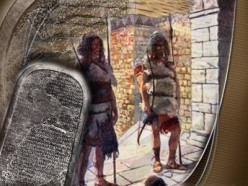
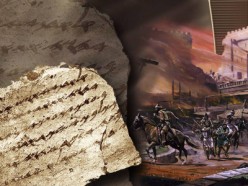 Testament, but now the selfsame stories are confirmed through these amazing stone records!
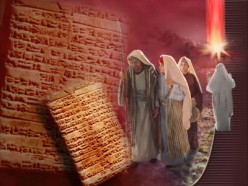 aside as unreliable, and other sources of information were advanced as authentic. Prior to modern archaeological endeavours, names of certain kingdoms, cities, and patriarchs were known only from the Scriptures – names such as Sodom and Gomorrah, numerous Bible places, names of Kings and records of their wars, defeats and victories. But a major archaeological discovery shook the world and vindicated the Bible at every turn.